What is a Breast Biopsy?
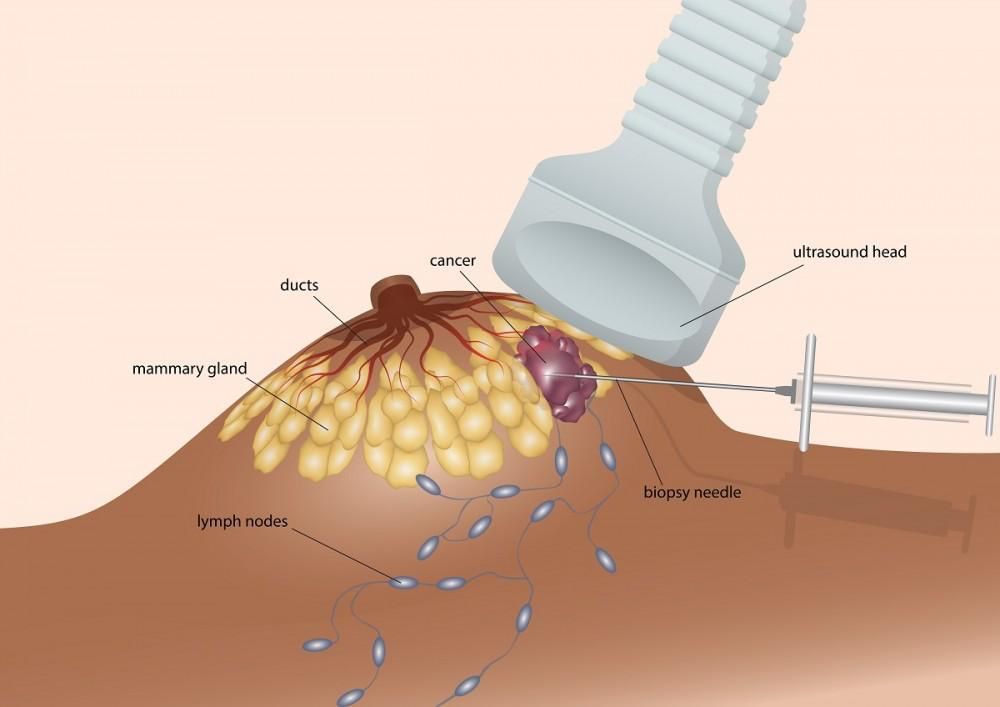
A breast biopsy is a simple medical procedure. The radiologist takes a small tissue sample from the breast using imaging guidance such as ultrasound, mammogram, or MRI. The sample is then sent to the pathologist for examination under a microscope.
A biopsy is usually recommended when a test result shows a suspicious finding. However, having a biopsy does not mean you have cancer. In many cases, the results turn out to be benign.
There are two main types of breast biopsy:
- Core biopsy – the most common method, using a fine needle to take samples.
- Vacuum-Assisted Biopsy (VAB) – a thicker needle, often used for microcalcifications or for removing benign masses in patients who cannot undergo surgery.
How is the Procedure Done?
First, the breast radiologist reviews your tests. Next, the breast is sterilized and a local anesthetic is injected to numb the area. After a few minutes, the doctor checks that the anesthetic is working before starting the biopsy.
A special needle is used to collect 4–6 small tissue samples. A tiny “clip” is then placed in the breast to mark the biopsy site for future follow-up imaging. The nurse applies compression for about 10 minutes, followed by a post-biopsy mammogram for documentation.
What to Expect After the Biopsy
After the procedure, you may feel heaviness in the breast or notice some red/blue discoloration. This usually disappears within 10 days. Applying ice packs during the first few hours can help reduce discomfort.
The entire procedure takes about 30 minutes, and results are usually ready in 5–7 days.